


April 22, 2026, 12:52 p.m.
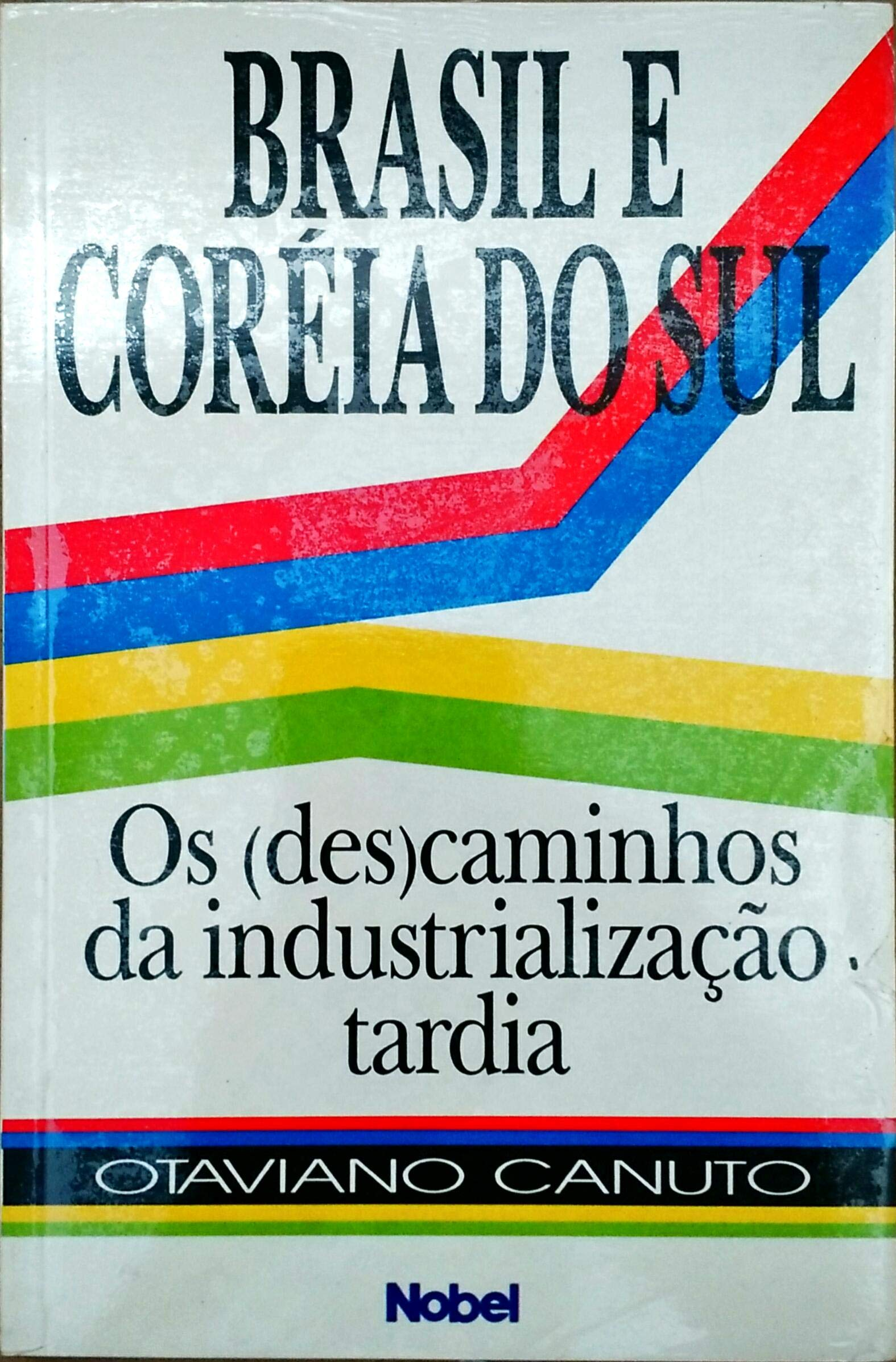
Brasil e Coréia do Sul
Os (des)caminhos da industrialização tardiaNobel
Review
South Korea is undoubtedly one of the most striking economic development success stories. Situated at the crossroads of several superpowers, the country was destroyed and severed by the brutal 1950 war. Despite this, it managed to grow its national product at impressive rates. Unlike Japan and Germany, however, its development was not the result of reconstruction, since what existed before was far from a prosperous, industrialized nation.
This book aims to discuss and describe the industrialization process Korea underwent up to the early 1990s.
It is divided into the following sections:
- Introduction: The Newly Industrializing Countries (NICs)
- The debate on lessons from East Asia
- Processes of late and peripheral industrialization
- Brazil and South Korea: Industrializations
- The NICs and the global economic restructuring
In the following chapters the author is quite detailed in describing the different industrial sectors and their characteristics within the process of technological development — for example, by separating heavy industry into the categories of Basic Metallurgy and Heavy Chemicals, Metal-Mechanical with mass production and non-mass production, each with specificities that make a sector more or less attractive for a late industrialization process, distinguishing it from earlier industrializations.

Finally, in chapters 4 and 5, comparisons between the Brazilian and Korean industrialization processes are made, including the role of banks, concluding with expectations for the future of the NICs. Despite everything, the author ends by emphasizing the futility of trying to reproduce in other countries the same mechanisms that prospered in Korea.
This is a book by economists for economists, with considerable emphasis on using and explaining theoretical concepts, much more so than on describing a timeline of events in the Korean economy. There is also almost no mention of the extremely turbulent national political landscape of the time — it is quite clear that the scope of this book is far from being an extensive economic history of the country; if I recall correctly, the name of Park Chung-Hee is not mentioned even once. All in all, it struck me as an excellent springboard for beginning studies on the Korean economy, though one might get more out of it having some prior familiarity with the theory of technology and innovation.